THE FINGER LAKES / LAKE GUIDE
Cayuga Lake
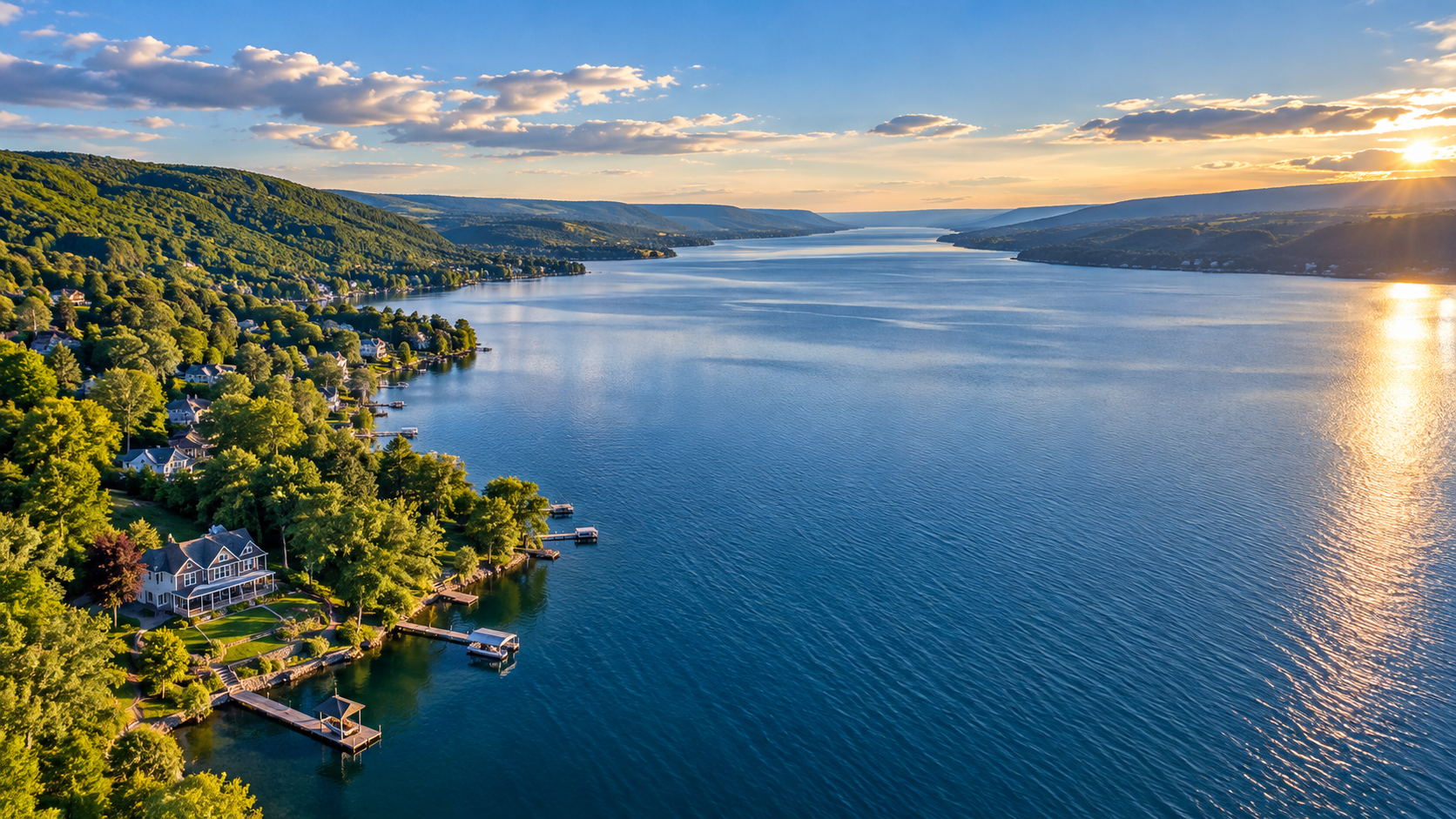
A Lake of Stories. A Place to Belong.
From Ithaca to Seneca Falls, discover a lake shaped by history, beautiful shoreline communities, and generations of waterfront memories.
A GUIDE TO LIFE ON CAYUGA LAKE
The Lake, at a Glance
Approximate length
Approximate maximum depth
South to north
Cayuga is the longest Finger Lake. Its glacial valley extends from Ithaca at the southern end toward the communities of Cayuga and Seneca Falls to the north. Hillsides, farms, historic villages, and university communities create remarkably different settings around one lake.
What makes Cayuga distinctive? Its size, changing shoreline topography, mix of rural and walkable communities, and access to boating, trails, wineries, restaurants, and cultural attractions.
Figures are approximate and may vary by source.
A Lake Rich in History & Heritage
Cayuga Lake is more than a scenic destination. Its shores connect living Indigenous history, movements for social change, education, agriculture, and the waterways that shaped upstate New York.
01
The Cayuga Nation
The lake takes its name from the Cayuga people, one of the original nations of the Haudenosaunee Confederacy. Their living heritage and ancestral ties to this landscape remain essential to its story.
02
Women’s Rights
The 1848 Seneca Falls Convention was a landmark gathering in the organized movement for women’s equality.
03
The Road to Freedom
Nearby Auburn became home to Harriet Tubman, and communities across the region participated in abolitionist efforts.
04
Innovation & Industry
Waterpower, canals, and manufacturing helped make Seneca Falls and surrounding communities centers of nineteenth-century industry.
05
Education & Discovery
Cornell University, Ithaca College, and the legacy of Wells College have shaped the region’s educational and cultural life.
Explore the Cayuga Lake Shoreline
There is no single Cayuga Lake waterfront experience. A home near Ithaca can feel very different from a cottage in the central lake or a property near the northern villages. Start with the four perspectives below, then examine the individual property.
SOUTHERN SHORE
Southern Cayuga Lake
Ithaca and surrounding communities offer dramatic hillsides, gorges, universities, dining, and cultural attractions. Some waterfront properties have steep access to the water.
CENTRAL SHORE
Central Cayuga Lake
Aurora, Lansing, Lodi, and neighboring areas combine rural landscapes, vineyards, historic settings, and a wide range of shoreline properties.
NORTHERN SHORE
Northern Cayuga Lake
Near Cayuga, Union Springs, and Seneca Falls, the terrain generally becomes gentler, with agricultural landscapes, historic villages, and broad lake views.
EAST & WEST
East Shore & West Shore
Many east-shore properties face west toward sunsets, while many west-shore properties face east toward morning sun. Individual orientation, terrain, trees, and weather exposure can change the experience substantially.
Bob’s Perspective
Look beyond the home itself. How you reach and use the waterfront, the sun and wind exposure, and the shoreline’s character can matter as much as the interior.
Living on Cayuga Lake
Summer brings boating, paddling, swimming, fishing, and long evenings with family and friends. Autumn offers quieter water and brilliant hillsides. Winter can be peaceful and beautiful, while spring is a season for getting docks, boats, and waterfront spaces ready again.
What lake homeowners should consider
Shoreline and access. Evaluate stairs, tram systems, retaining walls, water depth, and how easily people of different ages can reach the waterfront.
Docks and exposure. Wind, waves, seasonal water-level changes, and local requirements can influence the suitability and upkeep of docks and boat lifts.
Septic and drainage. Understand the wastewater system, inspection obligations, stormwater runoff, and any applicable municipal or watershed requirements.
Year-round practicality. Consider road maintenance, winter access, heating, insurance, internet service, and distance to groceries, healthcare, and other everyday needs.
Long-term plans. If the property will stay in the family, think ahead about maintenance costs, shared use, and how future generations will manage it.
Requirements differ by property and municipality. Confirm details with qualified inspectors and appropriate agencies.
Questions About Buying on Cayuga Lake
Where should I start when choosing a Cayuga Lake home?
Start with how you want to spend your time at the lake. Think about boating, swimming, visiting nearby communities, and whether you want a seasonal retreat or a year-round home. Then compare waterfront access, the setting, and everyday conveniences alongside the house itself.
How do the east and west shores differ?
Many east-shore properties face west toward sunsets, while many west-shore properties face east toward morning light. The experience at an individual home also depends on its orientation, surrounding terrain, trees, and exposure. Visit at different times of day when possible.
What should I look for when viewing the waterfront?
Walk the route from the home to the water. Consider stairs, slopes, seating areas, and how family members and guests would use the shoreline. Ask about the dock, boat lift, water depth, and maintenance history. These details can shape daily lake life as much as the home’s layout.
Where can I find more Cayuga Lake information?
Use the lake-specific links below for waterfront market reports, local services, lake stewardship, and property research. For help comparing homes and shoreline settings, ask Bob a question.
Cayuga Lake Resources
Have a question about lakefront ownership or the surrounding communities? Start with the lake-specific guides in Additional Resources below, or reach out through Ask Bob.
Sources & Further Reading
Useful starting points include the Cayuga Nation, National Park Service, New York State Department of Environmental Conservation, Cayuga Lake Watershed Network, Cornell University, and local municipal and historical organizations. Verify current regulations, water conditions, and historical details with authoritative sources.
Additional Resources
Continue exploring Cayuga Lake with these practical guides and tools.