THE FINGER LAKES / LAKE GUIDE
Seneca Lake
Deep Water. Wide Horizons.
From Geneva to Watkins Glen, discover an extraordinary lake of vineyards, historic villages, open water, and waterfront homes with very different personalities.
A GUIDE TO LIFE ON SENECA LAKE
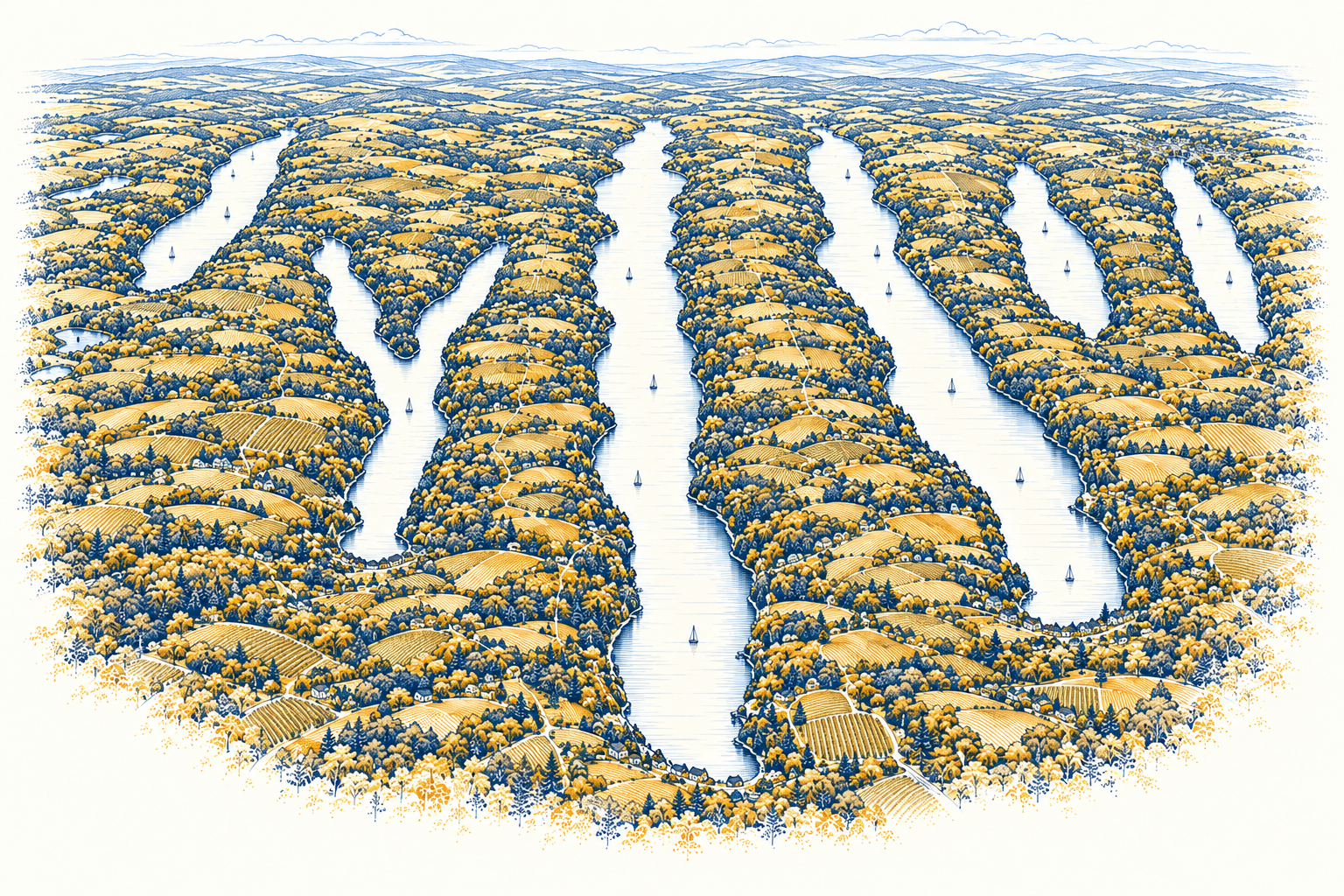
The Lake, at a Glance
Approximate length
Maximum depth
Geneva & Watkins Glen
Seneca is the deepest Finger Lake. Its size and open water help create expansive views, but also make wind, waves, and shoreline exposure important considerations for waterfront buyers.
Measurements are approximate.
A Lake Rich in History & Heritage
Understanding Seneca Lake means looking beyond the water to the people, communities, and traditions that shaped its shores.
01
Indigenous Heritage
The Seneca people are part of the Haudenosaunee Confederacy. Their enduring presence and history are fundamental to understanding this landscape.
02
Watkins Glen
The village at the southern end became known for its dramatic gorge, tourism, and later its international motor-racing heritage.
03
Geneva
At the northern end, Geneva’s historic neighborhoods, lakefront parks, and educational institutions contribute to a lively year-round community.
04
Canals & Commerce
Connections to regional waterways helped carry agricultural goods and support nineteenth-century trade and industry.
05
Vineyards & Wine
Seneca’s hillsides and lake-moderated growing conditions have supported a prominent wine region with tasting rooms along both shores.
Explore the Seneca Lake Shoreline
Each part of the lake has a distinct setting. These descriptions offer a starting point; the practical experience depends on the individual property.
SOUTH
Southern Shore
Watkins Glen offers marina access, a compact village, and nearby gorge trails; some hillsides rise steeply from the water.
WEST
Western Shore
Vineyards, scenic roads, and a variety of seasonal and year-round homes define many stretches between Watkins Glen and Geneva.
EAST
Eastern Shore
Rural landscapes, wooded slopes, and lakefront communities offer different levels of privacy and convenience.
NORTH
Northern Shore
Geneva provides shopping, dining, parks, and services close to the water, though individual waterfront settings vary.
BOB’S PERSPECTIVE
The view draws you in. The shoreline determines how you live.
Before choosing a lake home, consider the walk to the water, exposure to waves, dock suitability, drainage, and how the property works for family and guests of different ages.
The Details That Matter in Lakefront Living
Summer on Seneca Lake can mean boating, swimming, paddling, and gathering with friends and family. Autumn brings colorful hillsides and a quieter pace, while winter and spring have their own practical demands.
What homeowners should consider
Waterfront and docks. Because Seneca is large and deep, wind exposure and wave action are especially important when evaluating docks, lifts, seawalls, and boat storage. Assess slopes, stormwater drainage, shoreline stability, septic systems, and winter access.
Septic and stormwater. Understand wastewater systems, drainage patterns, inspection requirements, and how runoff reaches the lake.
Everyday access. Consider steep driveways, winter roads, internet service, insurance, and distance to shops and healthcare.
Long-term ownership. Budget for maintenance and think ahead about how a family will use, share, or eventually transfer the property.
Requirements differ by municipality and property. Confirm current rules with qualified professionals and the relevant agencies.
Questions About Buying on Seneca Lake
How do I choose between the northern and southern ends of Seneca Lake?
Compare the places you expect to visit regularly. Geneva anchors the northern end and Watkins Glen the southern end; homes between them offer a range of village, vineyard, and rural settings. Try the actual drive to shops, dining, and services, then weigh that convenience against the shoreline and setting you prefer.
What should I look at when comparing Seneca Lake waterfronts?
Look at exposure as carefully as the view. Compare the route down to the water, the shoreline’s condition, and how the dock and boat lift suit your plans. Ask about wind and wave exposure and the history of maintenance at the individual property.
What makes a Seneca Lake property practical for year-round use?
Check winter road and driveway access, heating, internet service, and the home’s maintenance needs. A cottage that works beautifully for summer visits may require additional preparation for winter living. Confirm the details for the specific home rather than relying on its appearance.
Where can I research Seneca Lake homes and local services?
The lake-specific resources below bring together home searches, waterfront market reports, local services, and stewardship information. For help comparing locations or deciding what to examine at a property, ask Bob a question.
Seneca Lake Resources
Use the lake-specific guides in Additional Resources below for water health, property rules, market information, and home searches. You can also reach out through Ask Bob.
Sources & Further Reading
Starting points for further research: Seneca Lake Pure Waters Association; New York State Department of Environmental Conservation; Geneva and Watkins Glen municipal and historical resources. Verify current environmental conditions, regulations, and historical details with authoritative sources.
Additional Resources
Continue exploring Seneca Lake with these practical guides and tools.